The Crested Butte News Serving the Gunnison Valley since 1999


At least 15 people found in the danger zone…
By Mark Reaman ]
With last summer’s passing of two legendary locals, Don Cook and Frank Magri, a rise in awareness with heart issues has taken hold in the North Valley. More and more locals have taken the calcium score testing procedure at Gunnison Valley Health. The test provides a better understanding of calcium buildup (plaque) in the coronary arteries, which can lead to heart attacks or heart disease. Statistics indicate the lives of more than a dozen people in the valley have probably been saved as a result.
GVH director of marketing and communications Erica Rasmussen said that as of last week, GVH had completed 256 calcium scores this year. In 2025, the CT calcium score volume was 401. The majority of the CT calcium score volume in 2025 occurred from July to December of last year. Almost 200 tests were conducted last month and that volume is due in part to a scholarship fund set up to help pay for the tests.
“Thanks to the generosity of our community, led by Diane Aronovic through the Frank Magri and Don Cook Memorial Fund, in partnership with the GVH Foundation, we were able to provide more than 198 screenings at no cost over the past month. This effort made a meaningful impact by ensuring that cost was not a barrier to accessing these important tests,” she explained. “To put this into perspective, prior to the funding, we averaged just three to five screenings per week. With this support in place, that number increased dramatically to 12 to 14 screenings per day.”
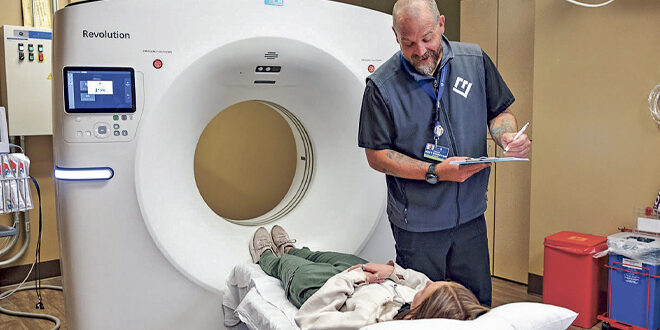
The test itself is a non-invasive Computerized Tomography (CT) scan that takes seconds using low-dose radiation. The process typically takes five to 10 minutes. Rasmussen said it helps patients and their providers understand the risk of atherosclerosis and therefore risk of heart attack.
“Scores can typically range 0 to 400 but can go into the 1,000s,” she said. “Zero is great. One to 99 shows mild coronary calcification and borderline increased cardiovascular risk. One hundred to 299 is a moderate coronary calcification with moderate increased risk for cardiovascular event,” she explained.
“More than 300 indicates moderate to severe calcification which can be a significant risk of cardiovascular event, essentially diagnostic for cardiovascular disease. Greater than 1,000 is very high risk and one-third of these patients will have an “event” such as a heart attack within the next three years.”
While GVH cannot comment on specific cases such as with Don or Frank, Rasmussen again emphasized the test does help patients and their providers understand the risk of atherosclerosis and therefore risk of heart attack. That then helps people make choices to address risk factors such as high cholesterol, high blood pressure or diabetes or to get further testing such as a stress test.
“Fifteen people with very high calcium levels were detected in the past year as more people chose to use the test,” Rasmussen said. “Thanks to this test, they were able to better understand indicators that could lead to a heart attack and received interventions such as cardiac stents, cardiac bypass surgery or very aggressive medication treatment.”
Rasmussen said that with high scores, the first step is to meet with a provider and determine benefit of medication to treat cholesterol, blood pressure and diabetes. For very high levels, GVH would then do an exercise stress test to see if the person is experiencing narrowing of arteries affecting blood flow to the heart that health providers can see with electrical signals of the electrocardiogram.
“We have had several community members this summer that have had their significant heart disease identified that way,” she continued. “Which may mean that the person would need a heart catheterization to visualize the actual cardiac arteries.”
According to the American College of Cardiologists, physicians often recommend CAC scanning for patients between the ages of 40 and 70; people with borderline or intermediate cardiovascular risk; those with a family history of heart disease; and for people deciding whether to start statins.
The initial funding with the scholarship fund established to help pay for the tests has been fully utilized, though Rasmussen said people who wish to donate may do so directly to the GVH Foundation, specifying this fund.
The test costs $149 and interested people can call 970-641-1456 to schedule an appointment. “Scheduling in advance is necessary due to the increase in demand we have seen,” concluded Rasmussen. “And that is a good thing for the community.”