The Crested Butte News Serving the Gunnison Valley since 1999


GCEA making big progress
by Mark Reaman
In the first of what will be a report to the Crested Butte town council every two years, the town sustainability department reported on October 5 that greenhouse gas emissions have decreased in town since the base year of 2022. Most of the credit goes to the Gunnison County Electric Association (GCEA) and its power wholesaler Tri-State Generation and Transmission that have both increased their reliance on renewable energy generated by things like solar and hydro power.
“Overall community emissions decreased 4.5% with cleaner electricity playing a major role, while natural gas and transportation emissions increased,” town sustainability coordinator Dannah Leeman-Gore wrote in her report to council. “Cleaner electricity was the largest driver of emission reductions. Electricity emissions decreased 16.7% while overall electricity use remained nearly unchanged, largely due to a 15.9% decrease in the carbon intensity of GCEA’s electricity supply.”
“On top of the lower carbon intensity with electricity from GCEA, residential buildings in town are becoming more efficient and that cuts emissions,” she continued. “And GCEA and Tri-State are continuing to make progress in expanding renewable electricity even more. We were directed to use our influence in that area and it is working.”
Leeman-Gore said that transportation and natural gas “remain key areas for future action. Transportation emissions increased 24% alongside a 7% in vehicle travel, while overall natural gas use and emissions increased 5%; commercial natural gas use increased 18%.
She said the new Oh Be Joyful solar farm is working well and generating the amount of energy GCEA expected when it approved the project in coordination with the town. Crested Butte pays a premium of about $30,000/year to subsidize the solar array. The goal is to have the solar farm produce enough energy to offset the town’s municipal electricity usage by 100%.
“The upfront investment in things like the solar array is part of the long game,” noted councilmember Kate Guibert. “I do wonder from a sort of branding angle if we can make it clearer we are working on climate action. Use that term instead of sustainability. People don’t all understand the ‘sustainability’ part of the department.”
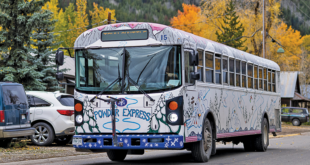
“I love the rebranding idea,” agreed councilmember Gabi Prochaska. “Sustainability is a word that can be used for anything. Any chance we get to occupy the advocacy space is really, really important. As far as the increase in transportation emissions, can we drill down to include the number of people being served by the public transportation? Get a better understanding of the RTA numbers. Having more people ride more buses is not a bad thing since it gets them out of cars, but it can result in higher transportation emission numbers.”
“The report indicates good, positive signs of what is happening,” said councilmember John O’Neal.
Leeman-Gore said compiling such a report would be valuable every two years at a minimum so that data and trends can be better analyzed.