The Crested Butte News Serving the Gunnison Valley since 1999

We See Hope nonprofit ties CB to Africa
By Dawne Belloise
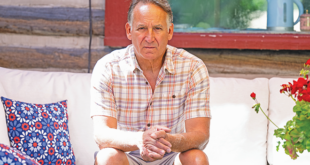
When Tom Miller began thinking about how he could initiate change for the betterment of those less fortunate, he turned to his friends and a love of both challenge and the outdoors. “About this time last year,” Miller says, “I was thinking about what 2026 could look like.” A plan was initiated to climb Mount Kilimanjaro to raise funds and awareness to the communities of sub-Saharan Africa.
Miller, who splits time between CB and Texas, began sending out messages to friends, among them were Phil and Wendy Wall. Phil Wall, a longtime friend he’d met years earlier while they were both studying in a master’s program at Oxford, England, is a former global executive coach, and also the founder of We See Hope, a nonprofit that has spent the last 25 years working alongside communities in sub-Saharan Africa. The climbers left for Africa on January 10 to begin the mountain ascent on January 15 and will return next week on January 22. Miller left earlier, visiting some of the villages that will benefit from the funds, “and to see the projects that are just beginning or have been in place for a year or two,” he says.
Miller had climbed Kilimanjaro a couple of years ago. “I thought maybe there’s a way to use that experience to help keep the work of We See Hope in Africa going.” That idea became Climbing for Change: We See Hope, a fundraising and awareness effort built around the climb of Mount Kilimanjaro, Africa’s highest peak at 19,340 feet. His idea was to invite friends to climb the mountain and raise one dollar for every vertical foot gained. “It wasn’t about doing something death-defying,” Miller says. “Kili is hard, but it’s not Everest. It’s a bucket-list climb for a lot of people. And saying yes to the climb was also saying yes to creating hope.”
When many people think of aid work in Africa, Miller says, the images are often limited. “You think starving children, but We See Hope goes to very remote villages and asks a different question – do you want to be proactive about creating a healthier community?” Rather than handouts, We See Hope focuses on long-term, community-led solutions like education, job training and economic empowerment. In many villages, that means apprenticeship programs in trades like tailoring or agriculture. Miller explains, “They’ll go to a community chief and ask, ‘Would you like a school here?’ But the community has to donate the land, the bricks or the labor to make the bricks. We’re not trying to just give things away.”
The Kilimanjaro climb itself is as much about endurance as it is about intention. The team will spend the first five days hiking around the mountain at elevations near 15,000 feet to acclimate. Summit day begins around midnight. “You climb about 4,000 feet over 3.5 miles in the dark,” Miller says. “That’s a hard night.” All climbers are funding their own trips, ensuring that every donated dollar goes directly to We See Hope’s work. The journey lasts seven days on the mountain and 11 days total, including travel.
Fifteen climbers are part of the 2026 team, with seven connected to Crested Butte and the Gunnison Valley as full or part-time residents. The locals participating are Jeff Jones, Nik Wogan, Carl Tucker, Curt Linville, Ted Crofford and Jim Consedine. “Everybody brings something unique,” Miller says. “That’s what a community does.” Nick Wogan, a Crested Butte-based videographer who works around the world will document the climb. “He’s coming along to tell the story,” Miller says. Oxford University will also cover the climb and its purpose in its alumni magazine. “That’s 300,000 people who’ll see the issue,” Miller says. “A lot of people simply don’t know about these realities.”
To date, the team has raised $142,276 toward a $300,000 goal through charity.pledgeit.org, with all funds going into We See Hope’s general programs and all work carried out by African contractors. We See Hope has already reached more than 728,000 children through partnerships with local NGOs. The need remains immense as an estimated 553 million people in sub-Saharan Africa live in multidimensional poverty, with nearly 317 million children under the age of 18 affected, most in rural areas with limited access to schools, healthcare and infrastructure.
When asked how others can help, Miller didn’t hesitate to suggest ideas. “If people want to donate, that’s great,” he says. “But awareness is the first thing. There’s a call to those of us who have ample resources of time, money and interest to be generous. We’re surrounded by people who need help. It might be on the other side of the globe or the other side of the valley, but it all matters. It’s a universal truth that when we learn to give, we become better people. When we give, it doesn’t just feel right, it is right. That’s why we’re doing something bigger than ourselves. It’s life giving.”
For more information or to donate to support the climb’s fundraiser, visit charity.pledgeit.org. For more info about We See Hope, visit weseehopeusa.org and weseehope.org.uk and also find them on Facebook.