The Crested Butte News Serving the Gunnison Valley since 1999


Potentially two new subdivisions along Highway 135
By Katherine Nettles
During a work session last week with the Gunnison County Planning Commission, two separate developer teams homed in on potential details to work toward completing their respective sketch plan phases with the county and move toward ultimate approval that could bring at least 400 new homes to the North Valley.
The developers from Starview, a proposed residential development near CB South at Highway 135 and Cement Creek Road, came back to the review process after resubmitting a sketch plan application in May.
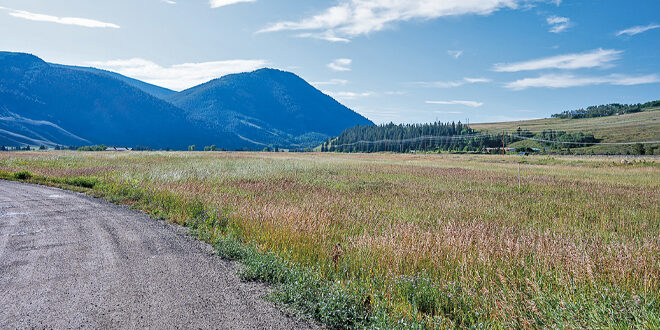
The developers from the Lower Verzuh Ranch proposal near the Hidden River and Buckhorn subdivisions on Highway 135 about three miles south of Crested Butte, attended their first work session for the proposal since having submitted their sketch plan application to the county in February. Next steps will be site visits to both proposed development parcels in early October, to be followed by another round of work sessions with the planning commission.
Starview, 2.0
The development team for Starview presented their new sketch plan proposal for 90 acres immediately south of CB South. The reworked plan reflected significant public input with less density, more open space, no commercial units and a second access road off Highway 135.
The Oklahoma-based firm Harrison Land Estates first submitted the project application to Gunnison County in 2022 for 76 units. The applicant, represented by local realtor Gary Huresky, then increased the project’s density according to Gunnison County planning commission input. After extensive public feedback during the public hearing process, they have readjusted to somewhere in between the first two general proposals.
The latest plan, presented by Huresky, calls for 107 units total, 83 of which would be open market home sites and 24 of which would be deed restricted plus one additional unit to be used for the CB South Metro District.
Huresky described that the team had revised their sketch plan application since a previous version submitted in March by reducing the number of units in the plan’s high-density area from 41 units to 24. The plan also left more undeveloped land at the parcel’s south end based on input from the Colorado Parks and Wildlife commission, increased highway setbacks to a minimum of 218 feet and included space for a ball field with parking. The denser units would have a maximum of 2,800 square footage and up to 5,000 square feet on the larger lots that overlook the river.
Planning commissioners confirmed with the team that berm heights had also been reduced with the bigger setbacks and would accommodate a potential rec path. Commissioner Eric Phillips said he appreciated the newly opened southern portion, and commissioner Roland Mason said he appreciated “that it also means when people come around the corner they won’t be hit with that immediate view of homes.”
Gunnison County assistant county manager for community and economic development Cathie Pagano asked for a few clarifications as to when the latest proposal was determined and confirmed that the next steps are for the developer to submit it all in writing and provide a comparison of what has changed since the previous version.
Huresky encouraged a site visit with the commission before the snow flies to see the elevations and layout in person. That will likely take place during the first meeting in October, followed by another work session with the commission.
Lower Verzuh
The commission also reviewed the Lower Verzuh Ranch application, a subdivision proposal for 301 mixed residential lots on 450 acres near Skyland. This was the first work session for the applicants, Bill Lacy and Daniel Dow.
Planning commissioner Sean Patrick recused himself from the meeting as the president of Buckhorn Ranch property owners’ association, an adjacent subdivision.
Jessica Garrow with Design Workshop presented the proposal. The lots would be subdivided into 45 one-eighth-acre lots, 165 quarter-acre lots, 74 third-acre lots, eight one-acre lots and nine three-acre lots with infrastructure for neighborhood clusters centered around a common area. The home size minimums would be 2,500 square feet, and the maximum 5,000 square feet.
The proposal calls for 60% conserved open space, 850-foot setback minimums from the highway and the southern area of the parcel would have a working hay meadow to preserve views and historic agricultural use.
Garrow identified a pedestrian circulation trail around the perimeter of the site that could have potential as a Nordic trail and identified space for a bus stop and potential for an internal bus loop if desired. Garrow noted that the developers are willing to dedicate a trail easement in the final plat to be used in a Crested Butte to Crested Butte South (CB2CBS) rec path as well.
Lots to the north closest to Buckhorn would be denser and smaller, and the developers have proposed 46 units (15%) to be deed restricted and the potential to add accessory dwelling units (ADUs).
Prompted by planning commissioner questions, Lacy said there would be a mix of people living at the site. Asked about the historic barn on the property, he said the Verzuh family had lived in that building, but the team hasn’t decided what to do with it yet.
Phillips asked how they reached their deed restriction and minimum square footage numbers, and Garrow said the LUR does not have any requirements, but they are proposing a mix of lot types to represent a range of home types. This began an extensive discussion among county staff, the commissioners and the developers about affordable housing needs and challenges of deed restrictions on vacant land, which is what the developers intend to produce.
The team’s attorney Marcus Lock acknowledged, “We’re watching the community grow. We’re watching the community struggle with growth.” He said the goal is to address that to the best of their ability and suggested that multiple solutions to affordable housing exist and one is increasing the supply of homes.
“We really do view it as a start of the conversation with you…we want your input,” added Lock.
Mason commented that ADUs are not “a silver bullet” as a housing solution, but Pagano said they cannot be discounted, either. Phillips suggested the ADUs have a minimum square footage if used in the project, because he has seen people maximize the square footage for their main house, then build the minimum for the ADU. “It puts everyone in a tough spot,” he said of the cramped living spaces meant for local workforce residents.
Pagano commented that vacant, deed restricted lots have been an issue, as can be seen in Larkspur.
Dow said they could also potentially offer vacant lots for other, even public entities, to build. “We have a lot of land here. And we’re not using a lot of our land,” he said.
Mason asked about the large number of units the development could add to the North Valley and suggested that they create a lower minimum for the smaller lots. Dow agreed to that. “We need to find ways for people to own homes; it’s still the American dream,” said Dow. He noted that the housing density would be lower than in both Whetstone and Buckhorn.
Planning commissioner Julie Baca asked the team to talk with Buckhorn and offer transportation easements to provide transit connectivity through both developments.
Pagano cautioned that CDOT has expressed an interest in “parallel transportation development along Highway 135,” if more development occurs and that the strong local desire to maintain Highway 135 as a two-lane highway and not expand it means providing other connectivity between neighborhoods. “Those are trade-offs,” she said of development.
Overall, the commission asked the team to consider more deed restrictions, to integrate some duplexes and triplexes, to get more information about connectivity and park and ride lots and ask the county housing authority about what type of deed restrictions have worked best.
They too will schedule a site visit in early October likely followed by another work session.